
In a first, the New York State Senate has formally adopted a resolution honouring the Indian Constitution on the occasion of its 75th anniversary, recognising it as a guiding framework for India's ongoing progress as a nation and celebrating the country's democratic values.

In his address, Singh said there should be "no double standards" in combating terrorism and urged the SCO member nations to condemn the menace with unity.

'The next decade will be even more transformative,' says Prime Minister Modi. 'We are moving from digital governance to global digital leadership.'

The FATF statement comes in the backdrop of Indian authorities highlighting Pakistan's persistent support for terrorism and its funnelling of multilateral funds for arms procurement.

'Illegal gambling operators are systematically exploiting India's advertising and payment infrastructure, siphoning off crores of rupees from outside the country.'

First things first: For those wondering if they need to reapply, the answer is no.

The decision by the Reserve Bank of India to introduce a unified regulatory framework on connected lending for all the regulated entities (RE) is expected to reduce the influence of business conglomerates in the Indian lending space, said bankers and experts. "Connected lending pertains to lending to related parties within the same business group. "While the RBI might appear more agreeable to allowing business conglomerates to own banking licenses, it deems it crucial to bolster regulations that would prevent conglomerate-owned banks from gaming the system," said Shivaji Thapliyal, head of research and lead analyst, YES Securities.

The National Pension System is applicable for government employees joining the service after April 1, 2004. It was based on the premise of contribution rather than defined benefit applicable for employees prior to the NPS.

'The only solution is for the government to allow us to charge a low controlled MDR of 25 bps on UPI P2M transactions only for merchants with more than a Rs 40 lakh turnover.'

'A lot of them are converted to other tokens, and since crypto is dealt with internationally, it can go to any exchange in any country.'

Non-banking entities such as fintech firms will have to tap into use cases beyond peer-to-peer (P2P) and peer-to-merchant (P2M) transactions to scale up the presence of the retail version of the central bank digital currency (CBDC), which is also known as the e, said industry players. These use cases will enable programmable transactions across domains, including the government's direct benefit transfer (DBT) schemes, with subsidies restricted to specific purposes such as food coupons, hospital bills, fertilisers, pesticides, and cross-border remittances.

'With a very stable technology with limited functionalities, a large network has spanned out.'

'We are not asking for incentives, but at least taxation can be aligned such that the rupee tax on consumers remains the same.'

"Based on this consensus, the process of disengagement is almost complete. Our efforts will be to take the matter beyond disengagement; but for that, we will have to wait a little longer," he added.

Will allowing business correspondents to hawk insurance products help in reviving 5-lakh strong field agents as a viable channel?
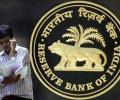
The Reserve Bank of India (RBI) has recognised the Fintech Association for Consumer Empowerment (FACE) as a self-regulatory organisation (SRO) in the fintech sector, the central bank announced on Wednesday. The banking regulator received three applications for fintech SRO. Of the remaining two applications, one has been returned by the RBI with a provision for resubmission after meeting specific requirements, while the third application is still under examination, said Governor Shaktikanta Das at the Global Fintech Fest in Mumbai.
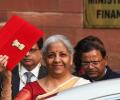
'... that it once again shies away from renewing its commitment to strategic divestment,' points out A K Bhattacharya.

'So, we would work with our members to ensure that we as an SRO create some sort of due diligence for fintechs.'

Market participants do not expect any immediate impact on the rupee from the Reserve Bank of India's (RBI's) a "comprehensive" master direction aimed at strengthening the framework for hedging foreign exchange risks. RBI Governor Shaktikanta Das, in his monetary policy statement, revealed that the central bank is poised to issue a master direction to consolidate guidelines for all types of forex transactions. But this development, according to market players, is more of a directional guidance than a mandatory directive.

Tech and startup industry bodies have again pushed back against calls by telecom operators to bring over-the-top (OTT) services under a licensing regime similar to telcos, and open them up to taxation. Ahead of public consultations on the issue later this week, the Internet & Mobile Association of India (IAMAI), Nasscom and the US India Strategic Partnership Forum (USISPF), among others, have written to the government arguing against such efforts.

Switching to the UPS could be a game-changer for your retirement planning, especially if you value guaranteed benefits and higher government contributions, observes Ramalingam Kalirajan.

The decline of over 5 per cent in PB Fintech's shares (the parent company of PolicyBazaar) in the past two days presents an opportunity for long-term investors to consider buying the stock, suggest analysts. By comparison, the benchmark S&P BSE Sensex has remained flat during the same period with a negligible gain of 40 points, or 0.06 per cent. Analysts believe that the recent selling is "overdone", as the company behind the online insurance portal remains committed to achieving profitability, and the potential threat from the government's online insurance portal, Bima Sugam, might be embellished.

In a major decision, the RBI on Friday announced that UPI payment limit to hospitals and educational institutions will be raised to Rs 5 lakh from Rs 1 lakh at present and hiked the cap for e-mandates for recurring payments to Rs 1 lakh. Unveiling the December bi-monthly monetary policy, Reserve Bank Governor Shaktikanta Das said the limit for various categories of Unified Payments Interface (UPI) transactions has been reviewed from time to time. "It is now proposed to enhance the UPI transaction limit for payment to hospitals and educational institutions from Rs 1 lakh to Rs 5 lakh per transaction," he said.

The Centre is unlikely to offer new direct tax incentives for units operating in special economic zones (SEZs) and may instead allow the grandfathering of previous exemptions that such units were entitled to, according to proposed amendments to the SEZ Act, 2005, people aware of the matter said. The amendments, proposed by the commerce department, will soon be considered by the Cabinet for approval. This represents a departure from the department's earlier plan to introduce these changes through the Development Enterprises and Services Hubs (DESH) Bill, 2023, which faced strong criticism from the ministry of finance.

The queue for mutual fund (MF) licences has thinned down due to quick clearances by the Securities and Exchange Board of India (Sebi) alongside applications being withdrawn amid regulatory changes. There were, at the end of September, only two pending MF applications: By AngelOne and Unifi Capital. By comparison, there were 11 applications lying before the market regulator at the start of calendar year 2023.

Earlier this month, Parliament approved the Insolvency and Bankruptcy Code, 2016.

The National Security Strategy document should flag all major issues concerning security strategy and provide guidelines to concerned departments to work out suitable action plans. Since the global and regional geopolitical canvas is dynamic, the NSS document should be deliberated at length before formulation and should be reviewed periodically, recommends Commodore Venugopal Menon (retd).

The compulsion behind India and Japan to deepen security cooperation is in response to China's growing political and economic clout and its assertive behaviour in disputed areas. This has been the key driver for bringing both India and Japan closer in the domain of security cooperation, explains Dr Rajaram Panda.

Investors may have to wait a little longer for Unified Payments Interface (UPI)-based block mechanism in the secondary market even as the market regulator has set the effective launch date as January 1, 2024. Several brokerage firms said they may take a few months more to implement it. Investors will be able to register for this facility only if the stock broker has opted for the UPI block facility.

The NSCN-IM delegation, led by senior leader V S Atem, met interlocutor A K Mishra at an undisclosed location in the national capital.

With the Reserve Bank of India's (RBI) extended deadline coming to an end, there will be no automatic recurring payment for various services including recharge and utility bill as the additional factor of authentication (AFA) will become mandatory from Friday. On December 4, RBI had directed all banks including RRBs, NBFCs, and payment gateways that the processing of recurring transactions (domestic or cross-border) using cards or Prepaid Payment Instruments (PPIs) or Unified Payments Interface (UPI) under arrangements/practices not compliant with AFA would not be continued beyond March 31, 2021. As part of risk mitigation measures, RBI announced this step to bolster safety and security of card transactions.

Three countries share a common interest in warding off cyber attacks from various agencies PLA is developing and training in China.

Modi was honoured with the 'Order of Zayed', the UAE's highest civilian award, in 2019 as a mark of appreciation for his efforts to boost bilateral ties between the two nations.

'In the larger cities, we can see that 12%-20% of the population making use of the metros. I don't think it is happening in the smaller cities.'

The proposed move would help in cutting down compliance costs and reducing the friction between rules enacted by capital markets watchdog Sebi, depositories and government, experts said.

The Reserve Bank of India on Wednesday extended the timeline by six months to comply with its guidelines related to recurring online transactions with Additional Factor of Authentication (AFA), but reprimanded players that the non-compliance is a "serious concern". RBI had directed all banks including RRBs, NBFCs, and payment gateways to comply with AFA for automatic recurring payment by March 31, 2021, in order to make digital transaction safe and protect customers from fraudulent transactions. However, some of the players failed to meet the deadline and approached the RBI seeking extension of the deadline.

Both the NSCN-IM and the government representatives have agreed to resume their peace dialogue on Wednesday in New Delhi to find a permanent solution to the vexed issue.
The Centre on Sunday said there are no plans to levy charges for making payments through Unified Payments Interface (UPI) while saying the service is a "digital public good with immense convenience". The ministry of finance said the concerns of service providers for cost recovery have to be met through other means. "UPI is a digital public good with immense convenience for the public & productivity gains for the economy.
The Reserve Bank on Wednesday allowed inbound travellers from G20 nations arriving at select airports to use the popular UPI for making payments in the country. Later, the RBI also proposes to extend the Unified Payments Interface (UPI) facility to travellers from all countries. UPI is a system that powers multiple bank accounts into a single mobile application, merging several banking features, seamless fund routing & merchant payments into one hood.

Reserve Bank of India governor Shaktikanta Das on Monday said payments through UPI (unified payment interface) have grown exponentially in the past 12 months with daily transactions crossing 36 crore, which is up 50 per cent from 24 crore in February 2022. In value terms, these transactions are worth Rs 6.27 lakh crore, registering a growth of 17 per cent from Rs 5.36 lakh crore in February 2022, the governor told reporters while launching the Digital Payments Awareness Week at the RBI headquarters in Mumbai this afternoon. He also said the overall monthly digital payment transactions crossed over Rs 1,000-crore-mark each month during the past three months.
